Rugged Individualist. Certified USA Triathlon Coach & NASM Personal Trainer, Men's Self Improvement Coach. President of Go Farther Sports. National Ranked Triathlete & 100 Mile Grand Slam Ultrarunner, only the fourth New Yorker to finish four of the oldest and most prestigious 100 mile ultramarathons in the U.S. in only 10 weeks.

Thursday, November 27, 2014

I am qualified for USA Triathlon Nationals in 2015

Acknowledging that resting is only for the dead, I was in front of my computer doing some coaching work and checking my emails and I came across this little gem:


"Congratulations Peter PRIOLO! You have qualified for the Olympic-Distance race at the 2015 USA Triathlon Age Group National Championships on Aug. 8 in Milwaukee, Wisconsin, after finishing in the top 33 percent in your age group at the Massachusetts State Triathlon 2014"


Due to my strong showing at the Massachussets State Triathlon this past year, I'm now qualified to compete in the USA Triathlon Nationals!

A trip to Milwaukee might be in the future next year for me! I'll have to check my overall schedule and see if it fits. If I do go, I'll be training very hard to make Team USA here. :-)


Friday, November 21, 2014

Your Big Race - Always Take a Calculated Risk for a Chance to SHINE!!!

With the Philly Marathon and the JFK 50 coming up, I wish all those doing these races the best of luck.

That being said, you'll need to take a final assessment of yourself and decide how to perform at your best in your race.

It ultimately comes down to whether you play it safe or take a bit of a risk.


My decision? Take the risk!


Yep, you can point out to that slew of DNFs that I have on my record for taking risks. But really, those DNFs were risks that I have taken and failed. I was still glad to take those risks because even with failure, I learned quite a lot about myself with those DNFs.

And if the gamble pays off? You could easily come away with the race of your life!

It hurt, but coming in at a little over 10.5 hours was one of the awards of a lifetime.


By playing it safe, you're basically guaranteed a certain finish time, but you really do not learn much about yourself that way. It's when you push outside your comfort zone; that is where you have the chance at having the race of your life.!

It has to be a calculated risk though; a risk that would give a reasonable chance of success. You cannot go into a marathon hoping to do a 2:30 if your previous best time for the marathon is 4 hours. If the training suggests, however, that you're capable of running 3:30, then that is the perfect amount of risk to take.
 
So as you decide on your strategy for the Philly Marathon or the JFK50, remember to ALWAYS take a calculated risk. Who knows? This might be the chance that you SHINE out there!


Monday, November 3, 2014

the ups and the downs of the nyc marathon

NYC Marathon Day is over.

This marathon draws a lot of feelings  from me when I'm up and about as a spectator. Some of them are mostly favorable, but there are several unfavorable feelings I do get. I'll see if I can compile them in a list.

The Upsides of the NYC Marathon

1) The runners themselves.

Although the faster runners meant all business, it's the slower runners that tend to lead a festive atmosphere in the streets of NY. Of course there was a good share of "costumed characters" like Superman, the waiter, and that guy who was running in just a skimpy Speedo whooping it up in front of the crowds.

Oh yeah, I definitely saw the Coatman at mile 12 of the race. This is part of the cheerful costumed crowd that decorates the NYC Marathon runners.

Then you have the other runners with their names on their shirts. This was you can cheer them on by name and hopefully give them a good emotional lift to get to the finish line. It just adds to a festive atmosphere in the race.

2) The spectators.

Most of the spectators lining the course are friends and family of runners that are on the course. So when you see a runner come up to a spectator and hug them in celebration, it's definitely a good moment to see.

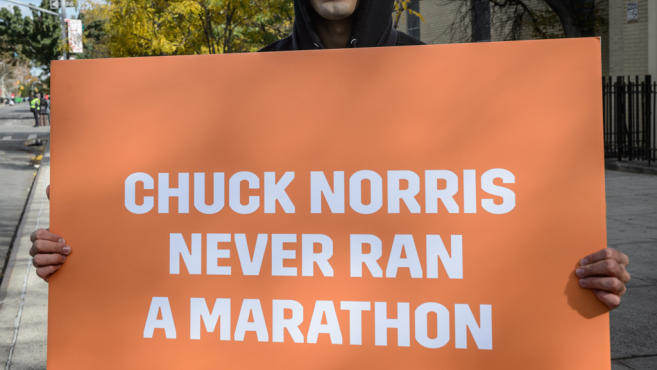
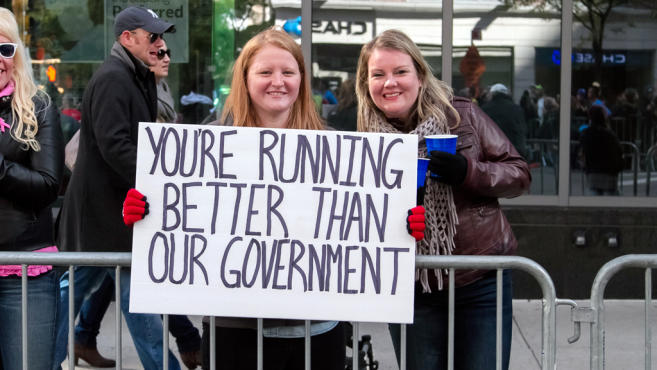
Most of these spectators come with their own humorous signs to keep the runners motivated.

I wonder if that's true?

Now THAT is true!

Between the runners and the spectators, there was definitely a party atmosphere going on!

3) The volunteers and staff

It takes a lot of hours of work just to put on a small race. It's a crazy undertaking to get a race as huge as this one running smoothly. I worked my small part in the marathon moving the mile markers into their positions and coordinating with the timers there so that their timing mats were in position to be operational. Without the staff and the colunteers, there wouldn't be a race, so hats off to everyone helping to get this race done!

4) Most NYers show their good natured side

Yeah, New Yorkers are a tough crowd, but it's the one day they turn their hardness off and show a soft spot for all the runners in their streets. There are a few people who don't care (I've seen comments from Staten Islanders bitching about the Verrazano Bridge closure in the local paper here, even though it's just one day out of the year (well, make that two days if you include the Five Borough Bike Tour), but those people are few and far between, thankfully.

5) The hype

Newspapers were covering the race all week. The TV networks were covering the race all week. It's been a non-stop blitz about the people who are running the race for the very first time. One can't help just getting carried away with the hype for the race and to come out and watch.

The Downsides of the NYC Marathon

1) The hype

There's a bit of a downside with the hype also...that it takes away the fact that it still is indeed a race. I remember when I did this race in 1995 it was not easy to run the first few miles at race speed due to the sheer number of people in my vicinity. It took until about mile 4 before I can get up to speed. And that was when the race was only 25,000 people. Which leads to the next downside...

2) The large number of runners

About 55,000 people finished the 2014 NYC Marathon. That is a heck of a lot of runners! Because of that, the last wave of runners started this race around 11:00AM! Most of this wave consisted of slower runners, and anyone who was finishing around 6 hours was going to finish at night. Yikes! Personally, this is one of the main reasons why I stay away from the real large races.

3) High Profile Race = Security Issues

No backpacks for the runners (they needed transparent bags to get into the staging area), background checks for the staff and volunteers, and a lot of police patrolling from the ground and from the air. Yeah, the Boston Marathon bombing made this a necessity, but I'm not sure if I want to be subject to a TSA check upon arriving at the start line. It's another reason why I tend to stay away from big races.

4) High registration fee and the hassle of getting in

The NYC Marathon has a lottery to get in. I'm not sure what the chances are of getting in, but there is another way for runners in this area to get in. They would have to register and run 9 of the NYRR races within a given period and volunteer and one other race in order to get the nod. The registration fee is around $300 more or less, and if one chooses to go into that "9+1" program, the cost basically doubles. At the same time I can register online for the Philly Marathon in 5 minutes for $140 (with the late fee included). The race happens in less than 3 weeks and the registration is still open.

In summary, the NYC Marathon is a huge race, and with marathons popping up in every city, it would probably be more convenient to easily register online for another marathon. But I cannot overlook the special atmosphere that the NYC Marathon provides. One of these years, I'll consider entering the lottery and do it again.

Saturday, November 1, 2014

NYC Marathon! Drafting Off Runners, Official Pacers, and Mile Markers

Good luck to all those doing the NYC Marathon tomorrow.

From the weather forecasts, it's going to be a bitter wind from the north. Since the first 20 miles of the marathon has runners going generally northward, this is going to mean a nasty headwind for the runners for the majority of the race.

The best thing a runner can do is to slip in behind a taller runner who is running the same pace as you and let him or her break that cold wind.


If you're the tallest person around, well, it basically sucks for you. lol.

Here are some good articles on drafting that shows it benefits runners as well as cyclists.


Anyway, this is the simple most effective strategy I can give you for tomorrow's NYC Marathon. If you're going to try for a PR, I think you're going to need help from that guy in front of you to do it.

------------------

One other thing that I've seen recently in marathons and in half marathons are the increase of official pacers. These are the sorts of people that carry signs like this for the race...


I think they are a welcome addition to these races and can help a lot of people keep their bearing during the race. The only downside, a small one, is that if you choose to run with one of these pacers you willing choose to give up your own strategy in the race. You also basically give up your chance to run a lot faster than the pace given by these pacers.

But a lot of the people in big marathons such as the NYC Marathon are settling for a certain pace anyway, so these pacers are a godsend. They get to be with other people with similar goals and will have company for the entire race, which sure beats running alone! Plus, they can probably pick up new friends in these groups.

--------------

I will be working in Brooklyn at the NYC Marathon tomorrow moving the mile markers into place. I will be on my bicycle moving from marker to marker. These are what the mile markers will look like...


There will be an opposite marker like this on the other side of the street. The white thing in the center records the timing chips for the runners that pass by these markers. This then goes to a central computer to produce real-time feeds to friends and family of the runner on the internet. Technology is grand, isn't it?

After my job is done, I will hightail it over to the 12 mile marker at Bedford Ave. to cheer on people I know doing the race. I'll be in a Tilly hat and should be on the right side of the course. Anyone who knows me can definitely shout out a "hello!".

I'll probably bike it across the Brooklyn Bridge to Central Park South to see the runners coming in to the finish. It might not be easy to find a viewing area there, especially with a bicycle in tow, but I'll see what I can do.


Thursday, October 16, 2014

Website Revision and Track Workouts for 100 Milers

I finally revised my website at GoFartherSports.com (or ironpete.com; it's the same site). I'm not what you call a programmer, but since I am strong in computer logic, I can get away with some programming.

And that includes putting up a website. It might be crude to some standards, but it's functional, and that is fine by me. I am a simple person after all.

There are still some things that I still have to work on with the website, but that will be completed in the next month or two.

-----

Training for a 100 mile ultramarathon has some similarities as training for a marathon, but there are also key differences between the two.

Remember that a marathon is still "only" 26 miles as compared to a 100 mile marathon, and that speed is very much part of the equation in getting that desired goal time. This means getting out on that running track and doing long repeats and ladders.


A 100 mile race is a bit different. Although speed an be a small factor in getting a decent time, it's "staying power" that is critical here.

Think about it, 99% of the runners who start the race at a certain speed do not maintain that speed throughout the entire 100 miles. Almost all will slow down. And a lot of runners will slow down *a lot*!

The goal is to acknowledge that you *will* slow down. But it's how dramatic your pace slows throughout the race that determines whether or not you'll finish well. And that is where the training comes in.

And that is where the focus lies in an ultramarathon. I do believe that track workouts are important when training for that 100 miler, but the similarities between that and in marathon training significantly differ.

In the coming weeks, I'll be posting some unique track workouts that I will be experimenting with when training for my Rocky Raccoon 100 miler in January.

Happy trails!


Sunday, August 31, 2014

Running Ridiculously Easy to Faster Race Times

As a coach, there is one thing above all others I truly do with athletes above all else. Take a guess what this might be.


Is it:

1) Make like a drill sergeant and shout and prod athletes to make them go faster?

2) Tailoring training plans for each athlete constantly to make him/her train on their time?

3) Get athletes to run slower on their easy days so that they have enough energy to perform well on their hard days.

If you chose 1, you've been watching too much TV. I know the stereotypical coach on TV shouts at unwilling athletes to get them to do his will. Fortunately, people who see me are quite willing to run fast when called upon, so this is never a problem for me.

If you chose 2, that would be true when I see athletes in the beginning. There is a lot of time involved with understand their available time, but once that is ironed out after several weeks, not much work is needed to maintain that continually.

If you chose 3, you are CORRECT!

Every single athlete that has seen me are perfectly WILLING to put that extra effort forward to help them do great in their race. In all my years I've been coaching people, there have been no exceptions to this, so I am quite fortunate.

The problem with most competitive athletes is to make sure they don't try to kick butt in training all the time. It's shutting those competitive juices down that can be tough on competitive athletes.

In a properly structured weekly training regimen, I only have my athletes go hard around 3 times per week. Sometimes it's 4 times, in case an athlete is approaching his/her big race. Sometimes, it's zero times, when an athlete has his/her normal recovery for the week.

The rest of the time, it's easy miles that fills up the rest of the week. And when I
mean easy, I mean ridiculously easy!

For the run, easy means going at least 90-120 seconds per mile pace slower than your marathon pace. If that sounds ridiculously easy, then they are running too hard.

Sometimes it's even better just to leave the watch at home and just run! There is something really liberating about running without any kind of instrument attached to you whether it's a heart rate monitor, or GPS, or even just a stopwatch. Just get out there, go ridiculously easy, and enjoy it!


A workout should be ridiculously easy enough so that they should feel energized after an easy workout, not tired.

And that is key for those 3 hard workouts on that weekly training plan. The overall strategy is to try to be 100% ready for that hard workout so that one can blast them to smithereens and get the best out of those harder workouts. If one goes too fast on their ridiculously easy workouts then can end up tired for those hard workouts that count; chances are he/she will not get the best results from those workouts.


"You want to do well in your harder workouts? Then make sure you train easy in your easy workouts"


Case in point, when I was training for the Grand Slam of Ultrarunning last year, I found that I have done around 80% of my miles at a very slow pace last year. Granted, most ultramarathons, especially 100 milers, have me running at a slow pace, so you can argue that point. But there were hard training days that were needed to give me the extra power to go up the hills of the Rockies and the Wasatch range, especially at higher altitude where oxygen was scarce.

This year I qualified for USA Triathlon Nationals at a blistering 2:10:59 at an Olympic Distance triathlon in Massachusetts. I did a bit more speedwork for this race, but was pleasantly surprised that 75% of my run-up for this race was still ridiculously easy.


"Consistency in training is one of the critical factors in performing better fitnesswise. That means training 5-6 days per week. If you want to keep training for 5-6 days per week for every week, you'll need to make sure a good percentage of those workouts are easy. Otherwise you run a high risk of getting burned out or injured in your training."


Bottom line...if you want to perform better and go faster at races, you'll need to slower in your easy recovery workouts...
"...Trust me on this."

Monday, August 25, 2014

Random Thoughts - 2015 Planning

Week 3 of my offseason has started, and I'm already starting to feel a whole lot stronger.

It just strengthens that idea that an 8 week offseason is needed every now and then. With all of these endurance events, a break is definitely needed.

During this break, the planning for the 2015 season is under way. The first definite race of the new season is the Rocky Raccoon 100 (RR100), down near Houston Texas.

It's going to be nice to get down south from the cold northeast winter and try a Texas 100 miler.

This pictures of the trails there look extremely flat. Would that make them fast? I hope so. Starting October I'll be training hard for this race and will be looking for a PR at the 100 mile distance. My current PR is 21:24:21 in Vermont.

With non-technical trails like these at RR100, I hope to PR on this course...

...that is, if I don't become a meal first!

UTMB?

I'm hoping the second year is the charm for getting into the most prestigious ultra in Europe, the Ultra Trail du Mont Blanc (UTMB). Most second year lottery entrants for this race do get in, so I'm crossing my fingers for this one. This race is run in the last weekend of August.

Even though I did survive and finish the Grand Slam in 2013, I still feel more can be improved on my hill climbing. I'll be adding a lot more strength and core training to my regimen to strengthen my body for the rigorous climbs in this race. I don't want to just survive this race, I want to do extremely well. So I'll be putting in a lot of hard work towards this end.

Start of UTMB in Chamonix, France. It's the "Tour de France" of Ultrarunning.


Leadville 100?

How did this race get back into my radar again?

Maybe it's because it was the toughest race I've ever finished?

Maybe it's because this race has definitely changed my life for the better after my first attempt in 2011 resulted in a miserable DNF?

Maybe it's because I can still probably learn a lot more about myself if I race it again?

Maybe because I know of a lot of people who might be going to Leadville next year and I want to get on that bandwagon?

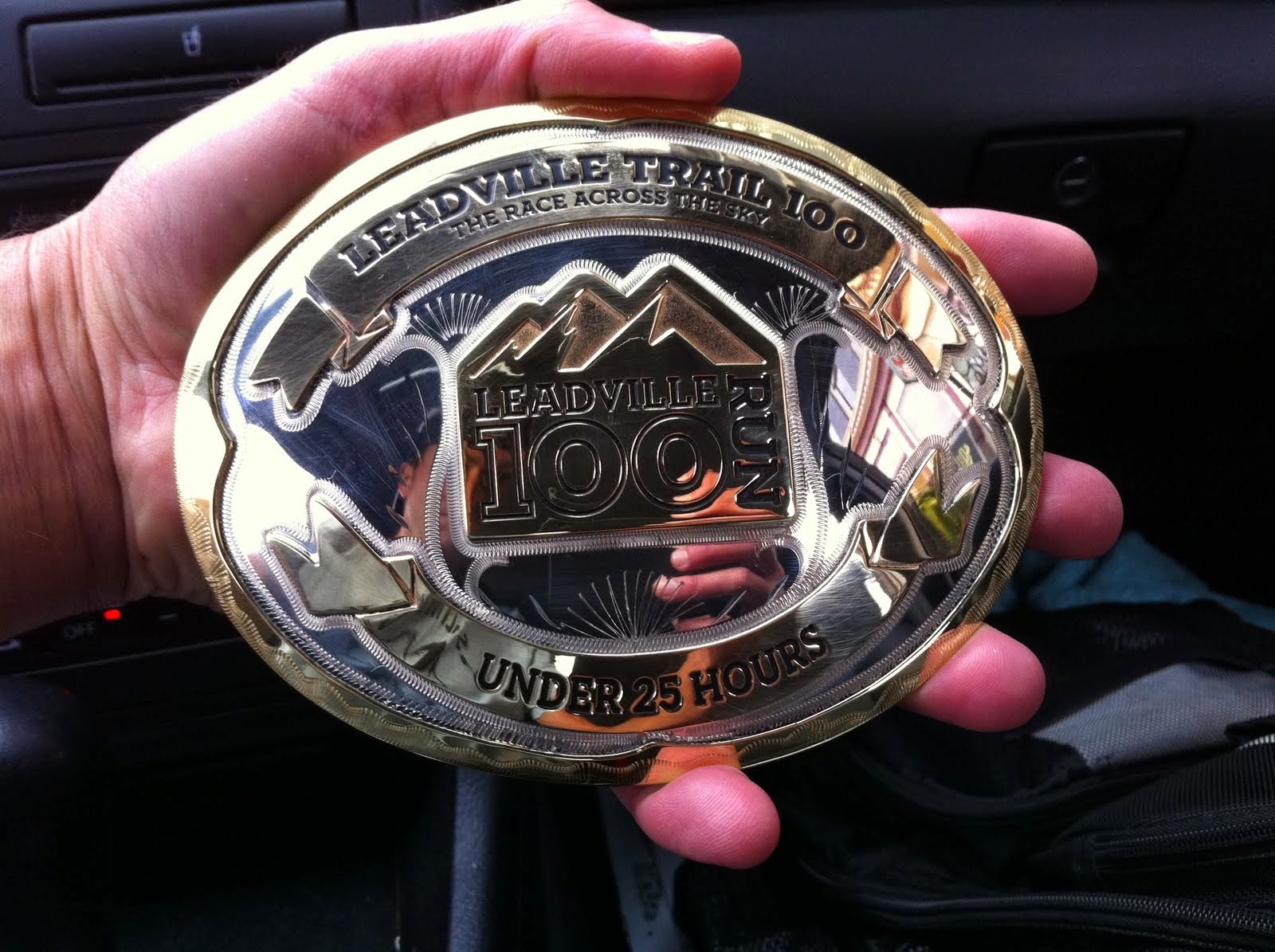
Or maybe it's just because I want that huge 25 hour buckle...

Damn, that's a thing of beauty!

Well, for whatever reasons, there is a strong possibility that I will be registering for Leadville again on January 1. The only doubt that I have is that that race is just 2 weeks before UTMB.

Two hilly killer races in 2 weeks. Just shoot me now!


USA Triathlon Nationals?

On the triathlon front, I do want to try my hand in Nationals and see how I do. This past year, I've posted a 2:10 at the Massachusetts State Triathlon, so I know I still have the speed to compete at the olympic distance.

The problem is, I don't know where or when USA Triathlon Nationals will be next year. And that information is notoriously delayed until January. My racing schedule will probably already be set at that time, so I'll have to let fate tell me whether it's possible to race Nationals or not.


Other races?

Three Days at the Fair. I ran 161 miles this past year. Maybe try for 200 miles?

Running around in circles. I actually enjoyed it last year. I still don't know why...


The Bear 100. If UTMB doesn't come through, this race would be a strong possibility. It's a Hardrock 100 qualifier too; that is incentive enough.

Bear 100. What a beautiful race!


Vermont 100. Less of a chance next year, but I need two more Vermont 100 races to get a 500 mile buckle.

Vermont 100.


Hardrock 100. Very slim chance of making it, but I'll throw my name into the lottery and see what shakes out.

Hardrock freakin' 100!


NJ State Triathlon. Olympic Distance tri, it'll be nice to compete, AND BEAT triathletes in my area. If you're in my age group, I will track you down!

NJ State Triathlon